Joshua Berry

Archive

Much Older
Work.

A couple of personal and independent projects from well before the career case studies above — kept here for the record, not because they're the sharpest work, but because they're where a lot of the instincts started.

2010 – 2020 Personal / Independent Kept for the record

Personal Project — Quarantine Build

Signal
Clock

An interactive clock for the home that listens to its surroundings and turns ambient audio into the clock's hands — displayed live as waveforms. Designed for anywhere people gather and sound is made: home, office, media room. Concept has roots going back a few years; this build started during quarantine.

Processing Raspberry Pi / Orange Pi Custom Hardware Audio Reactive 3D Printing Woodworking

Type

Personal / Ongoing

Hardware

Orange Pi PC (Armbian), prev. Raspberry Pi 3B+

Software

Processing

Formerly

Groove Clock (2010–2012)

Recognition

Figment NYC 2012, Governors Island — site B-1, as Groove Clock

In the wild

Installed behind reception desks at a couple of startups

The Concept

Signal Clock listens to its surroundings and uses live audio input to display the clock's hands as waveforms. The video above shows the very first iteration of the current physical form — there's still a lot of work to do. The idea itself goes back further: this is the same project first built and shipped as Groove Clock, rebuilt during quarantine as dedicated hardware and renamed Signal Clock.

Hardware

  • Board: Orange Pi PC running Armbian — migrating from a Raspberry Pi 3B+ to a custom ARM Linux build for better performance.
  • Display: Circular LCD touchscreen. Not plug-and-play — getting it working required reading the component's datasheet. The touchscreen has no driver board of its own, so I designed one and I'm writing the software driver myself.
  • Enclosure: 3D printed PLA, primed and painted, with threaded inserts for hardware mounting.
  • Face plate: Laser-cut maple, hand-ebonized using natural processes. The clock numbers are currently etched and hard to see — next revision they'll be metal, with relief to match the screws.
  • Bezel (between screen and face plate): 3D printed via SLA.

Software

  • Built in Processing. Audio input is "stylized" so the clock hands stay smooth, and frequencies that don't look good visually are filtered out.
  • Single tap the screen to pull up a radial-slider UI for screen color and microphone sensitivity.
  • Long press to pull up a shutdown UI.

Process & Artifacts

Drop a build photo or close-up here
Drop another build photo here

What's Next

  • Smaller screw heads — the current ones are a bit large.
  • Clock face numbers to match the screws in material, finish, and relief.
  • Deepen the wood's black tone using natural processes if possible; otherwise mix a custom paint blend to match. The wood grain is staying either way.
  • Finish the touchscreen driver and full touch functionality.

History — as Groove Clock

Before it was Signal Clock, this project shipped as Groove Clock — an iPad app and public installation that used ambient microphone input to manipulate the hands of an on-screen clock. It launched on the App Store, was shown at Le Poisson Rouge's interactive art exhibition in 2011, and was installed at Figment NYC 2012 on Governors Island (site B-1, Nolan Park), per Figment's official site map. The quarantine-era rebuild in the video above moved the same idea off the iPad and into dedicated hardware, under the new name Signal Clock.

PDF — Program Directory Figment NYC 2012 — "Groove Clock," site B-1 Open PDF ↗
Festival program directory listing every 2012 installation and its site code.
PDF — Site Map Figment NYC 2012 — Governors Island, grid ref. B-1 Open PDF ↗
Official site map for grid reference B-1 (Nolan Park).

The Betacup Challenge, 2010

Networked
Loyalty

An entry to the Betacup's "Drink Sustainably" challenge — a Starbucks-sponsored, jovoto.com-hosted open contest that asked creative thinkers to help solve the disposable coffee cup waste problem. My entry, Networked Loyalty, proposed a social/incentive scheme to encourage cup reuse. It was named one of five Community Rating Winners, selected by public vote.

Concept Loyalty / Incentive Design Service Design Sustainability Competition

Challenge

The Betacup — "Drink Sustainably"

Sponsor

Starbucks Coffee Company

Platform

jovoto.com

Year

2010

Prize

$2,000

Result

1 of 5 winning concepts, out of thousands of entries

Press

New York Times, Core77, Popsop

The Challenge

The Betacup — backed by Starbucks as part of its push to serve 100% of hand-crafted beverages in reusable or recyclable cups by 2015 — launched an open contest on jovoto.com on April 1, 2010, asking entrants to solve the disposable cup waste problem. 430 entries came in, ranging from biodegradable single-use cups to edible "coffee balls" to social incentive schemes for reuse. Starbucks put up $20,000 in prizes: $10,000 to the jury's top pick, and $2,000 each to five entries chosen by public/community rating.

The Concept

Networked Loyalty proposed placing RFID-tagged stickers on customers' existing reusable coffee mugs. Scanning the mug at the point of sale would eliminate the waste created by disposable cups while also updating a digital version of Starbucks' paper "10th cup free" punch card automatically — no card to lose, no stamp to forget, and a direct incentive to bring a reusable mug back every time.

Entry & Artifacts
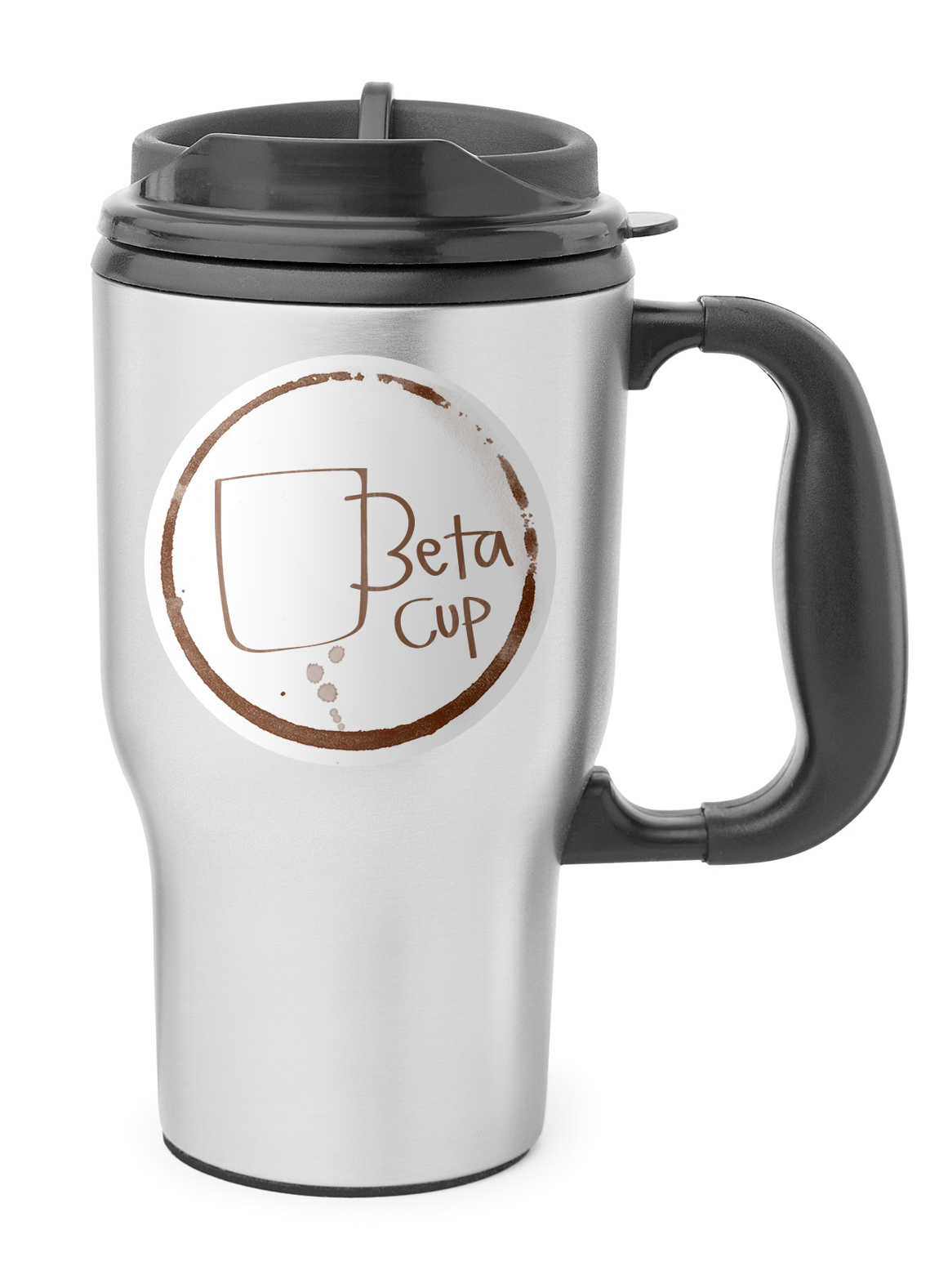
Beta Cup entry mark — coffee-ring graphic used on the submission Branded travel mug mockup with the Beta Cup coffee-ring logo
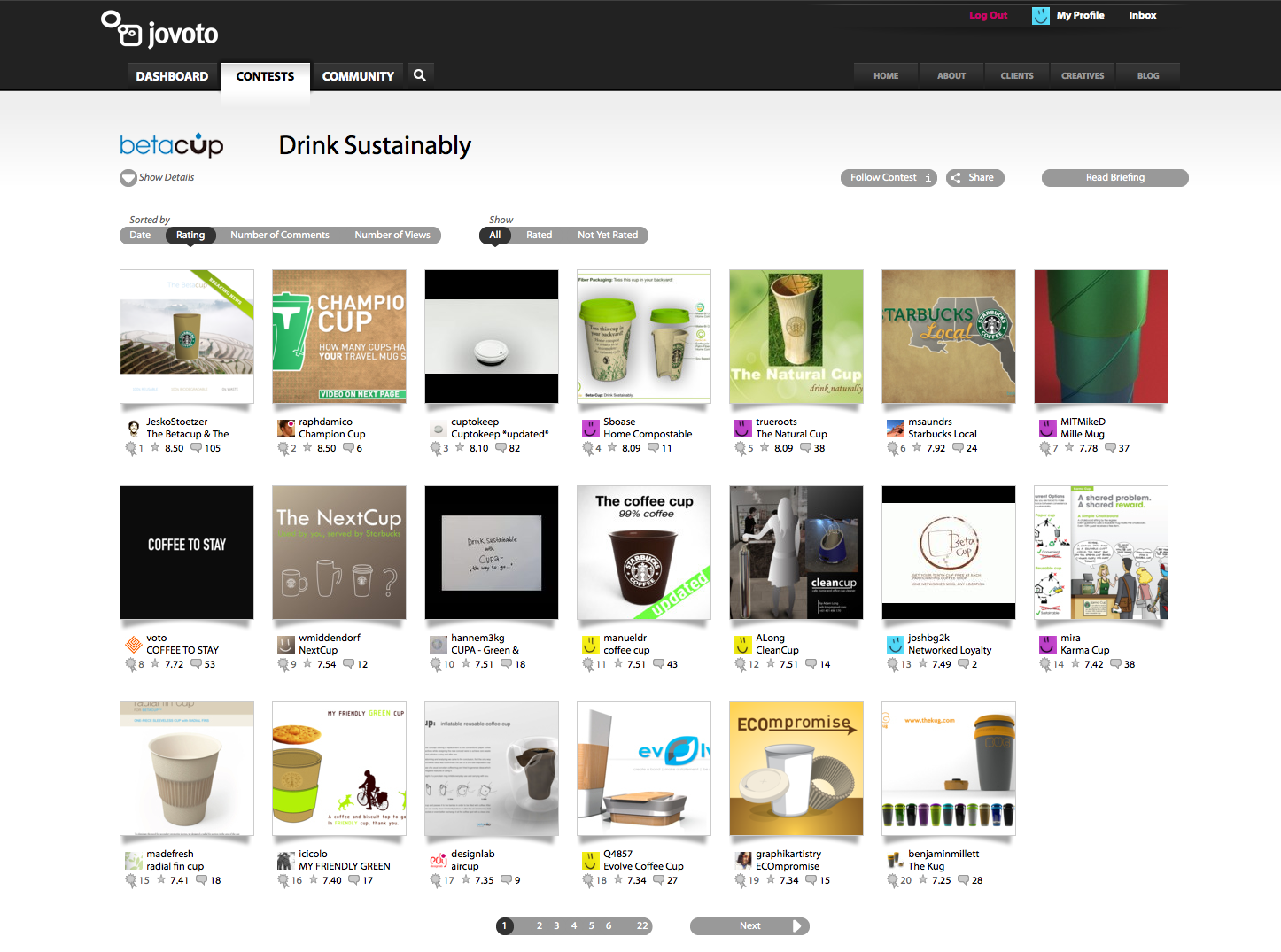
jovoto.com Betacup contest leaderboard showing the Networked Loyalty entry by joshbg2k

Outcome

Announced June 17, 2010: the jury's overall pick was Karma Cup (Mira Holley, Nick Partridge, Gillian Langor, Mira Lynn, Zarla Ludin, Ruth Prentice), with special mentions for The Betacup & The Betacup Campaign (Jesko Stoetzer), Champion Cup (Raph D'Amico), and Band of Honor (Scott Moorhead). Networked Loyalty was named one of five Community Rating Winners, selected by public vote alongside The Betacup & The Betacup Campaign, Cuptokeep, The NextCup, and The Neutral Resource Coffee Cup. Networked Loyalty went on to pick up coverage in the New York Times and Core77, in addition to the contest recaps below.

Press

NBCUniversal · 2011

Telemundo
Mobile Web

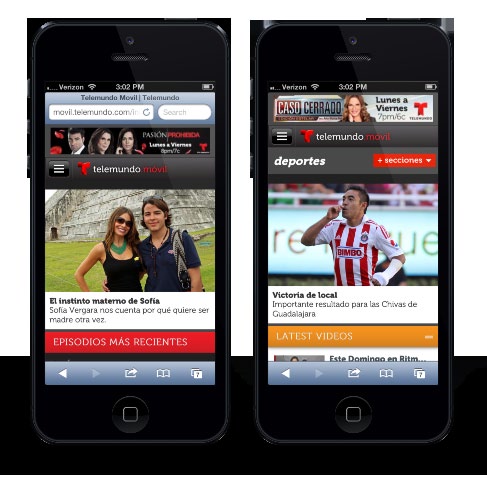
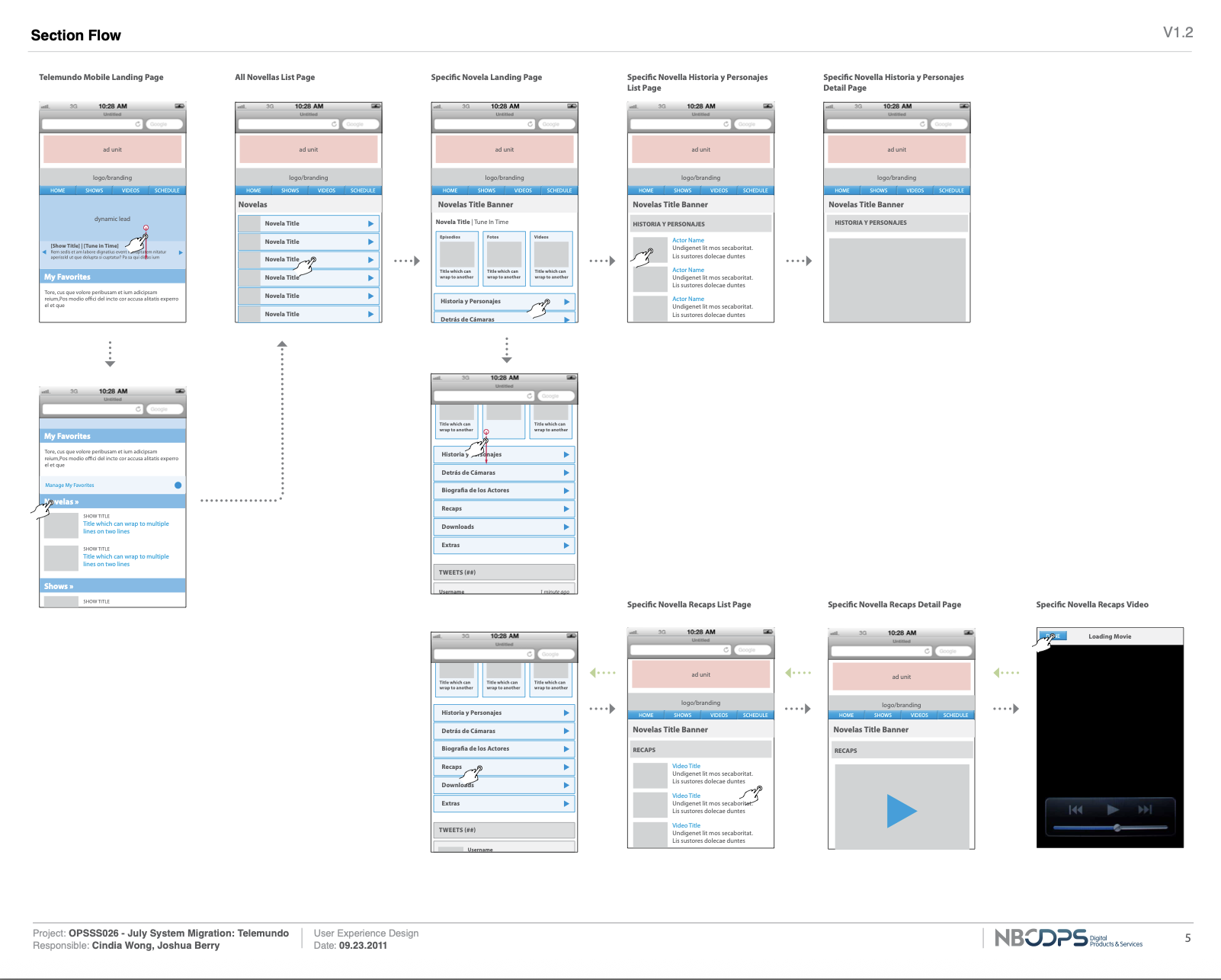
A mobile web redesign for Telemundo.com — my role covered UX strategy and UX design. Visual design was a downstream project handled separately. The UX template was later adopted across USA Network, Syfy, Oxygen, and Bravo.

UX Strategy UX Design Mobile

Client

NBCUniversal

Year

2011

Impact

Template reused across USA, Syfy, Oxygen, Bravo

NBCUniversal · Zeebox · 2012–13

Lookalikes

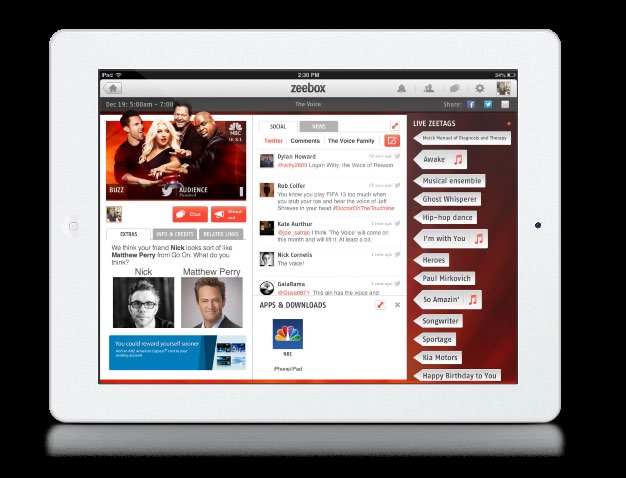
A facial-recognition R&D micro app built inside the Zeebox second-screen platform — matching users' Facebook friends to NBC talent.

Engineering AI R&D

Client

NBCUniversal / Zeebox

Year

2012–13

Type

Facial Recognition · Micro App

Zeebox second-screen app on iPad showing the Lookalikes facial-recognition feature matching a user's friend to Matthew Perry